Problem
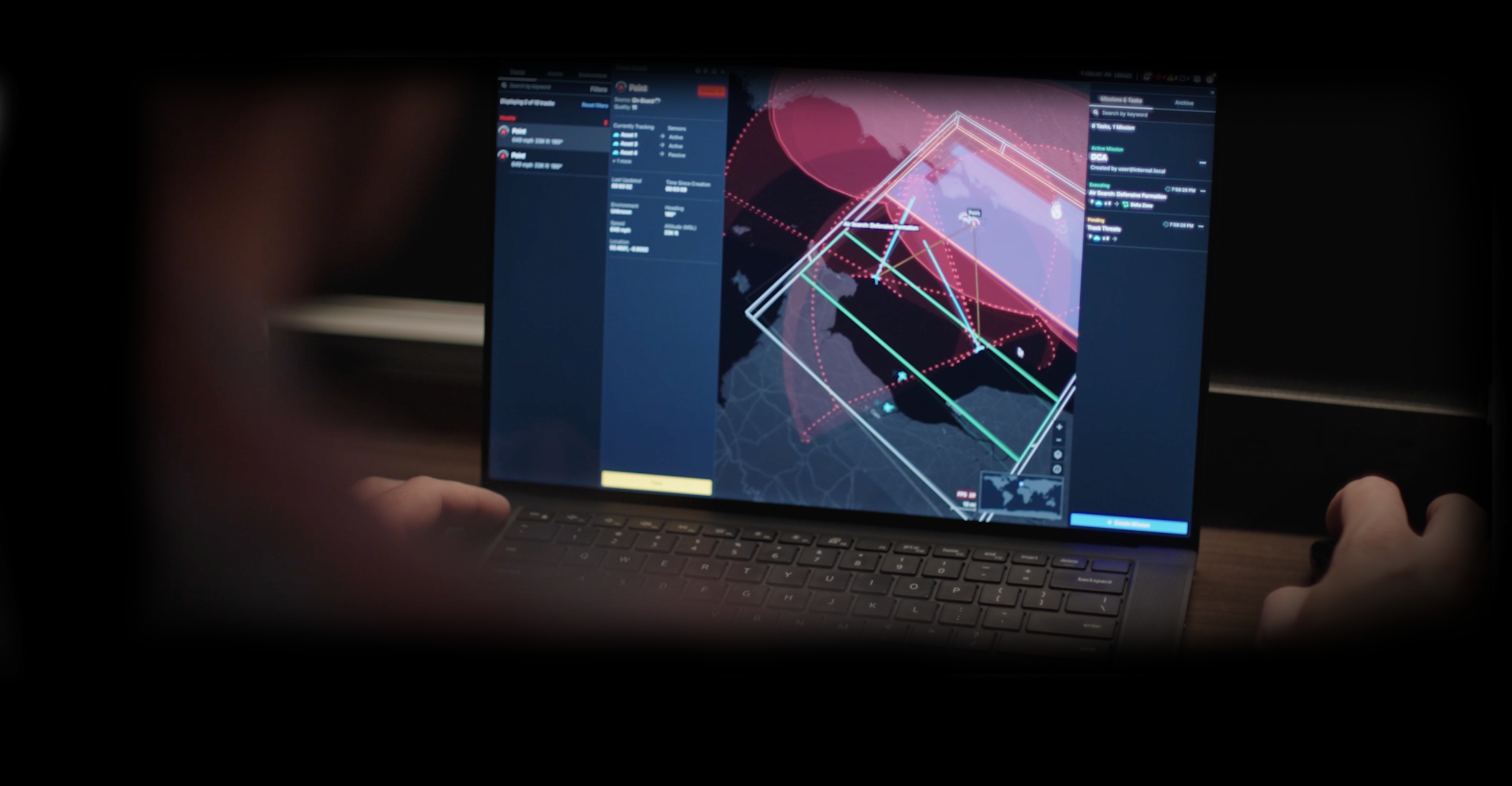
Critical signals remain fragmented across operational systems, allowing disruption to escalate before its full impact is visible.

LTKAU INITIATIVE
Sovereign intelligence for supply chains that cannot afford to fail.
LTKAU is an Australian-controlled software initiative being developed to identify emerging risk across procurement, supply chains, cyber systems and critical operations — before disruption becomes operational failure.
It connects authorised information from otherwise fragmented environments, detects concealed relationships and behavioural anomalies, and supports coordinated action within defined policy and human-authority controls.
Disruption develops across systems, not inside one dashboard. LTKAU connects authorised signals across procurement, suppliers, inventory, transport, infrastructure, financial and cyber environments — without replacing core platforms or compromising customer control. Lupotek began developing LTKAU before resilient logistics became a national capability priority; built on proven commercial foundations, it has an early position and a credible path to deployment and recurring revenue.
Existing operational systems → LTKAU intelligence layer → Detect and assess → Authorised response
Critical signals remain fragmented across operational systems, allowing disruption to escalate before its full impact is visible.
LTKAU connects authorised data to detect risk, map dependencies and coordinate policy-controlled responses.
Australian-controlled and integration-first, agentic intelligence without replacing core platforms or surrendering data control.
Government, Defence-aligned supply chains and critical-infrastructure operators requiring sovereign, high-assurance deployment.
Funded development and implementation, multi-year licensing, integration services and recurring sustainment.
Defined architecture progressing toward validated, security-assessed and pilot-ready capability.
Australia has prioritised logistics resilience and supply-chain capacity, validating demand without guaranteeing LTKAU revenue.
LTKAU delivers a secure intelligence layer for behavioural detection, entity resolution and cross-domain analysis. It connects authorised information from otherwise separated systems, establishes expected patterns of activity and identifies relationships, anomalies and emerging risks that may not be visible within individual platforms.
LTKAU securely ingests authorised data through APIs, event streams, controlled batch processes and other approved integration methods. Information relating to identities, transactions, suppliers, accounts, assets, devices, locations and operational events is normalised and validated to support consistent analysis across multiple systems and data sources.
LTKAU establishes behavioural baselines using historical activity, organisational roles, operating cycles, locations, seasonality and relevant operational context. Deterministic rules, statistical analysis and controlled machine-learning models are then used to identify material deviations, unusual combinations, velocity changes and other indicators of elevated or emerging risk.
LTKAU resolves entities and identifies relationships between people, organisations, suppliers, accounts, devices, assets, locations, transactions and events. Confidence levels are retained throughout the analysis so uncertain associations are not presented as established facts. By correlating activity across operational, transactional, cyber and commercial domains, LTKAU can reveal networks, sequences, clusters, concentrations and behavioural patterns that would otherwise remain distributed across separate systems.
Findings are prioritised and presented with supporting context, identified relationships and explainable risk indicators. This enables authorised personnel to review, investigate and act on relevant information while maintaining human oversight and accountable decision-making.
LTKAU is designed to integrate with existing infrastructure through controlled interfaces and phased implementation. This enables organisations to introduce and expand capability without unnecessary system replacement, while retaining control over deployment architecture, authorised data access and operational governance.
Correlates cross-system signals to identify supplier failure, stock depletion, route disruption, infrastructure loss, cyber compromise, inventory inconsistency and abnormal demand.
Maps critical dependencies, forecasts cascading operational effects and ranks response options against mission priorities, available capacity, confidence levels and policy constraints.
Recommends or coordinates pre-approved actions such as reallocating inventory, rerouting deliveries, activating alternative suppliers and reserving scarce capacity. Consequential decisions remain under human authority.
Existing operational systems → LTKAU intelligence and orchestration layer → Detect and assess → Authorised response
For government and dual-use environments, LTKAU is intended to strengthen visibility across procurement, supply chains, cyber activity, insider risk and operational systems.
For enterprise and regulated industries, it can support fraud detection, transaction monitoring, network-risk analysis, entity profiling, reconciliation and operational-risk management.
Australia’s 2026 Integrated Investment Program has publicly identified the resilience of logistics networks, supply and distribution chains as a national capability priority. The Program provides planned investment of A$14–21 billion for Theatre Logistics and Health, including A$10–15 billion for additional logistics centres and capacity.
The requirement is already public, and Lupotek are ahead of the curve.
We have already started working on solutions that directly cater to solving such capability priorities. LTKAU’s opportunity is to demonstrate that its software can address a defined part of that requirement faster, more securely and more effectively than conventional system-by-system approaches.
The Australian Government’s 2026 Integrated Investment Program allocates A$14–21 billion to Theatre Logistics and Health, including theatre-logistics uplift, improved fuel resilience, deployable logistics and health capabilities.
LTKAU is designed to support relevant elements of these priorities through:
LTKAU may also support related priorities in Theatre Command and Control, Enterprise Data and ICT, cyber resilience and decision advantage. The Integrated Investment Program establishes the strategic and expenditure context for the capability requirement. It does not represent revenue allocated or committed to LTKAU.
LTKAU is designed to generate revenue through four complementary channels:
Milestone-funded development, controlled implementation and multi-year licensing and support arrangements for sovereign and high-assurance environments.
Annual or multi-year licensing for critical-infrastructure and regulated-enterprise customers, structured according to deployment environment, integrations and required capabilities.
Project-based revenue from implementation, data connectors, configuration, security engineering and customer onboarding.
Recurring revenue from software maintenance, security updates, model governance, technical support, assurance and environment-specific capability improvement.
LTKAU’s core software components can be reused across deployments, while integrations, controls and operational workflows are configured for each customer. This supports recurring licensing and sustainment revenue, complemented by implementation and specialist integration fees.
Commissioned development and managed maintenance of machine-readable domain models, operating standards, control libraries, reporting taxonomies and implementation mappings for regulators, standards bodies and regulated sectors.
Commercial revenue may include funded framework development, sector-specific extensions, managed updates, implementation packages, conformance testing, assurance support and proprietary tooling built around the separately governed LUTINE Ontology. The commercial objective is to combine higher-value implementation revenue with recurring licensing and sustainment. A reusable software core supports deployment across multiple customers, while integrations, controls and operational workflows remain environment-specific.
LTKAU capabilities progress through four controlled stages:
Define the operational requirement, authorised data, intended users, security conditions and measurable acceptance criteria.
Evaluate the capability in an approved environment against documented datasets, operational baselines, performance measures and false-positive requirements.
Integrate with authorised systems and assess security controls, data protections, performance and operational dependencies.
Proceed to operational deployment only after agreed technical, security and customer-acceptance requirements have been satisfied.
Each deployment will be assessed against the controls applicable to its intended environment. Australian Government implementations may include relevant Information Security Manual requirements, an agreed Essential Eight maturity target and, where required, independent IRAP assessment.
One Intelligence Foundation. Multiple Applications.
A common software foundation can be configured for different environments without presenting every application as a separate product line.
Contested Supply-Chain Intelligence.
LTKAU draws on architecture, operating experience and technical lessons derived from a separately deployed commercial anomaly-detection platform operating in high-volume environments, with over 98% detection success rate.
Supporting technical, commercial and performance evidence is available to qualified counterparties through Lupotek’s controlled due-diligence process. LTKAU-specific performance will only be reported following documented testing against defined datasets, baselines, latency requirements and false-positive thresholds.
Detect. Decide. Act.
LTKAU detects emerging supply-chain threats, evaluates their operational impact and coordinates authorised action across procurement, inventory, transport and logistics systems — before disruption becomes mission failure.
Every recommendation includes its rationale, confidence level, resource requirement and projected operational effect. Consequential decisions remain under human control, while approved routine and time-critical actions can be executed automatically within defined policy limits.
LTKAU does not replace established logistics providers, procurement platforms or operational systems. It connects them through a sovereign intelligence and orchestration layer that provides cross-network visibility, predicts points of failure and coordinates the fastest viable response.
The result is a supply chain that anticipates disruption, prepares resources early and continues operating when normal commercial assumptions no longer apply.
For Defence, LTKAU supports dispersed operations, contested routes, degraded communications, volatile demand and force sustainment across Australia and the Indo-Pacific.
The same capability strengthens critical civilian supply chains across energy, resources, health, food, telecommunications, transport, ports and emergency management. Continuous commercial use allows the platform to be tested, improved and operationally ready before a national emergency or conflict occurs.
LTKAU also enables continuous supply-chain stress testing before a crisis occurs. By simulating route denial, supplier loss, infrastructure failure, cyber disruption and sudden demand surges, the platform exposes hidden dependencies and single points of failure across Defence and commercial networks.
This allows organisations to validate contingency plans, pre-approve alternative suppliers and transport capacity, and rehearse response options in advance — turning resilience from an assumption into a measurable, continuously tested capability.
LTKAU is a defined technology-development initiative drawing on established commercial architecture and operating experience. Lupotek is progressing LTKAU through a controlled 24-month development pathway intended to move the initiative from defined architecture into demonstrable, independently assessable and contract-ready capability.
Funding will support product development, controlled validation, security assessment and pilot readiness over 24 months. LTKAU-specific performance will only be reported following documented testing and validation.
Phase 1 — Final architecture, priority use cases, authorised data requirements, secure development environment and measurable acceptance criteria.
Phase 2 — Core ingestion, entity analysis, anomaly detection, explainability, audit and human-approval capabilities demonstrated on controlled data.
Phase 3 — Selected-system integration, measured performance evaluation and contested-logistics simulation.
Phase 4 — Security assessment, customer acceptance preparation, pilot readiness and contract-ready deployment and support model.
LTKAU can support regulators, standards bodies and regulated industries in translating complex obligations, operating procedures and reporting requirements into structured frameworks that can be consistently understood by people, organisations and authorised systems.
Through the separately governed LUTINE Ontology, Lupotek can develop common definitions, relationships, evidence requirements, control models and machine-readable implementation mappings for defined regulatory or operational domains.
Potential applications include:
The commercial model is not limited to access to the ontology itself. Revenue may be generated through commissioned development, managed domain extensions, implementation tooling, system mappings, continuing updates, testing, assurance and deployment support.
A regulator or standards body can establish a common framework, while regulated organisations retain control of their systems and implement the framework through approved mappings, integrations and operating controls.
Lupotek is seeking qualified government, critical-infrastructure, enterprise, research, technology and strategic-capital partners to support LTKAU’s controlled development, validation and commercialisation.
Eligible counterparties may request:
*Observed Benchmarks Resources:
Legacy and Current System real-world success rates are calculated based on average reported dataset numbers, referenced below.
• Absolute Security (2026) The State of Endpoint Resilience: Enterprise Protection Gaps. Seattle, WA: Absolute Security.
• CrowdStrike (2025) 2025 Global Threat Report: The Reality of Modern Adversaries. Austin, TX: CrowdStrike Intelligence.
• ESET (2026) SMB Cyber Readiness Index 2026. Bratislava: ESET.
• Vectra AI (2026) How Behavioural Analytics Works in Cybersecurity. Available at: https://www.vectra.ai/topics/behavioral-analytics.
• LTKAU Success Rate based on 11 years of real-world data (average) from leveraged deployed, commercial AI platform based on proprietary software solutions.