

sneak peaks

behind the curtain
LupoTek operates privately, yet we’re pleased to offer a glimpse behind the curtain. What follows is a curated selection of projects we’ve chosen to make visible, each one reflecting the sparks that drive our broader work.
These examples represent only part of what’s underway, yet sharing them serves a clear purpose: to offer inspiration for the next generation of thinkers, creators, and humanitarians. By making these pieces visible, we aim to encourage new ideas, new questions, and new pathways that help advance humanity in a peaceful and constructive direction.
Together, they form a foundation for others to build upon, shaping progress through curiosity and intention. Insight breeds momentum, and momentum shapes what comes next.
curated insights
-
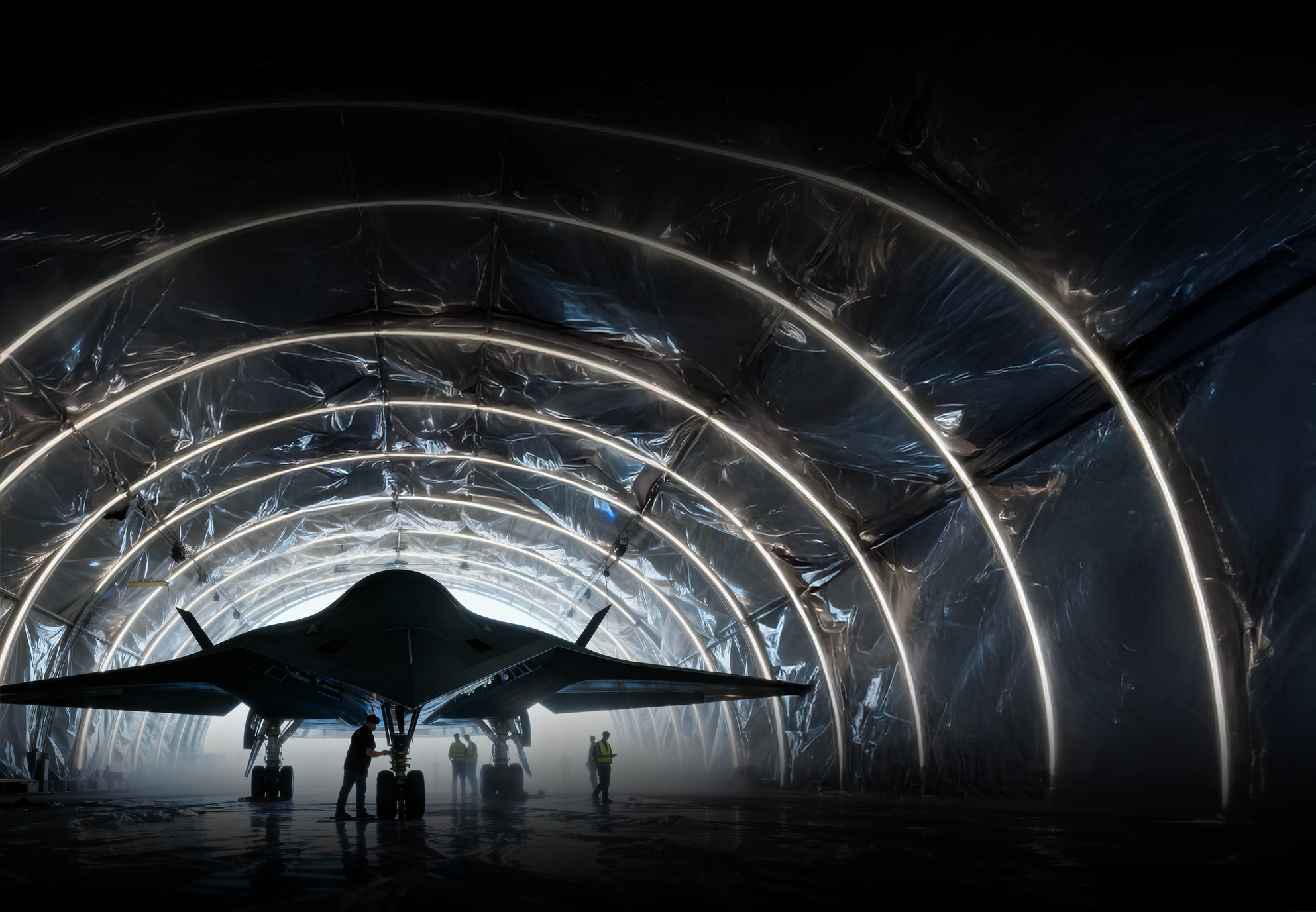
Aerotech explores applied engineering approaches to aerial systems, with a focus on performance, efficiency, and operational reliability.
The program examines how aerodynamic design, material selection, and control systems interact under real-world conditions. Work is conducted through modelling, prototyping, and iterative testing to better understand how different configurations behave across a range of environments.
Areas of focus include:
Flight dynamics and stability analysis
Structural design under variable loads
Integration of sensing and control systems
Efficiency considerations in propulsion and energy use
The goal is to develop practical insights that can inform future aerial platforms, with an emphasis on measurable performance and repeatable results.
-
This program investigates how computational systems can assist vehicles in interpreting and responding to complex environments.
Rather than assuming full automation, the focus is on improving reliability, predictability, and situational awareness through a combination of sensing and modelling techniques.
Key areas include:
Multi-sensor data integration
Environmental mapping and state estimation
Adaptive control under changing conditions
Interfaces that support human oversight
The approach prioritises systems that are observable, testable, and capable of operating within clearly defined limits.
-
Companion Intelligence refers to software systems designed to support human decision-making through structured analysis and data interpretation.
These systems are intended to assist by:
Identifying patterns in complex datasets
Highlighting anomalies or trends
Providing contextual information for review
They are developed with an emphasis on:
Transparency in how outputs are generated
Human control and final decision authority
Continuous refinement based on validated inputs
The systems are positioned as analytical tools rather than independent decision-makers.
-
The Energy program focuses on improving how energy is stored, transferred, and utilised within engineered systems.
Research is centred on understanding system-level efficiency and identifying practical ways to reduce losses across different operating conditions.
Areas of exploration include:
Energy storage architectures
Conversion efficiency under load
Thermal management considerations
Integration of energy systems into larger platforms
All work is grounded in established engineering principles and evaluated through testing and measurement.
-
Made to Spec explores manufacturing approaches designed to improve precision, consistency, and material efficiency.
The program investigates fabrication methods that operate under controlled conditions, enabling repeatable outcomes and reduced variability.
Focus areas include:
Process-controlled material deposition
Low-distortion fabrication techniques
Monitoring and adjustment through real-time data
Optimisation of material usage and structural integrity
The aim is to support production processes that are predictable, measurable, and adaptable to different design requirements.
-
The Supplementation program examines formulation strategies intended to support general wellbeing and sustained performance in demanding conditions.
Research focuses on:
Stability and consistency of formulations
Delivery mechanisms for nutrients and compounds
Compatibility with varying environmental and operational contexts
All concepts are developed within the scope of general nutritional support. They are not presented as medical treatments and are subject to applicable regulatory frameworks.
-
Perfect Vision explores systems that enhance how users interpret and interact with visual information.
The platform combines display technologies, sensor inputs, and computational processing to present data in a more accessible and structured format.
Key objectives include:
Improving clarity of information in complex environments
Reducing cognitive load through better visual organisation
Supporting real-time interpretation of dynamic data
These systems are designed to assist users, with interpretation and decision-making remaining under human control.
-
Transmedium Craft investigates vehicle concepts capable of operating across multiple physical environments.
The program focuses on understanding how systems can transition between conditions while maintaining stability and efficiency.
Areas of study include:
Structural requirements for multi-environment operation
Behaviour during transitions between mediums
Control system adaptability
Material performance under differing stresses
This work is exploratory and centred on identifying practical constraints, design trade-offs, and feasible implementation pathways.
PARtnERS
PARTNER ACCESS POINT
Our Partners are able to access their secured two-stage Dashboard and Project Intranet via the secured login highway, through this page, here. Not available to the general public.